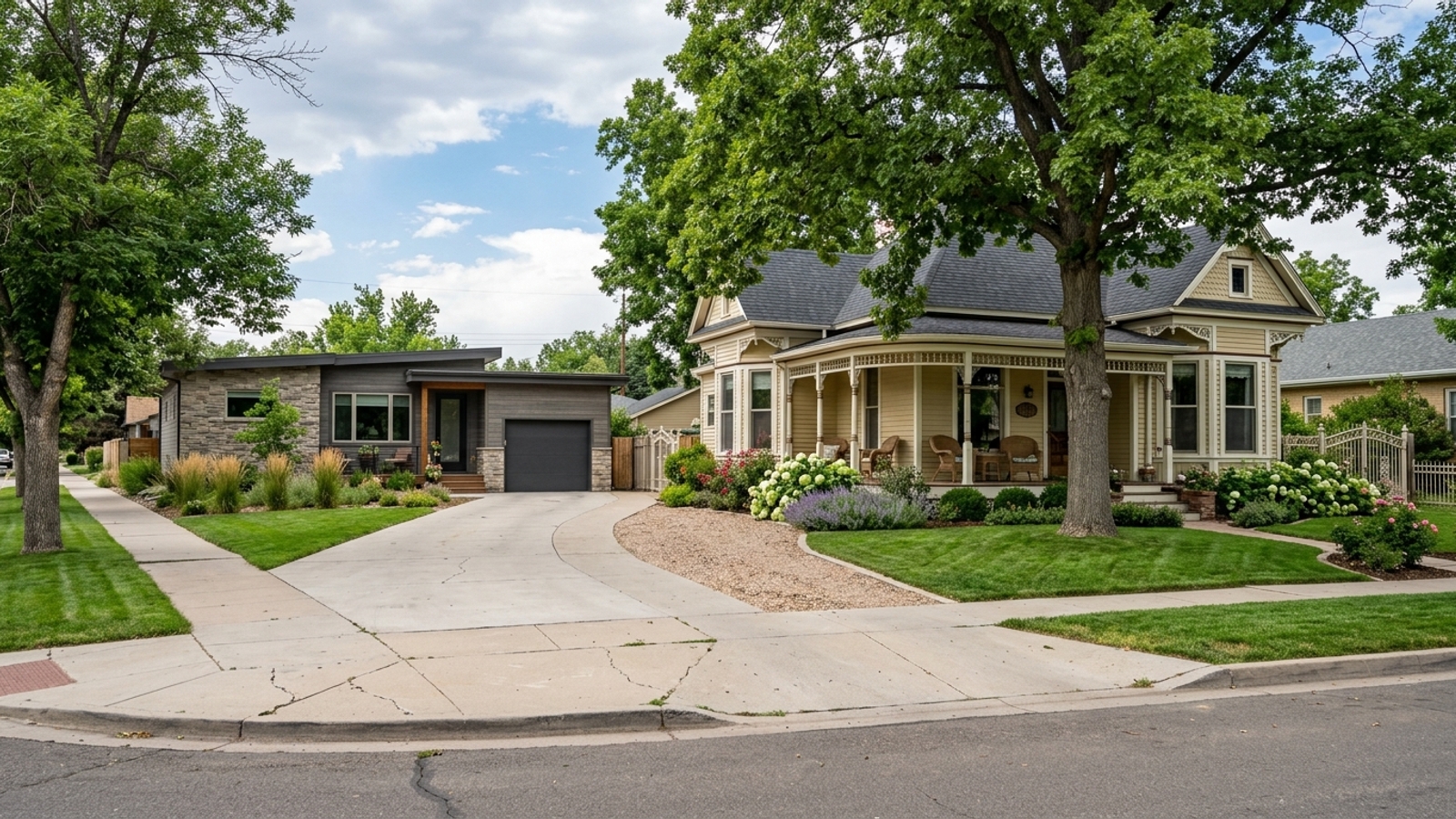
The median sale price for a home in Greeley, CO sits around $427,767 right now. With 432 homes currently on the market, first-time home buyers in Greeley have real options - but figuring out what actually fits your budget takes more than a quick glance at a listing price.
Lenders work from specific formulas to set your maximum loan amount, and your personal comfort zone may land somewhere different. You'll want to factor in Weld County property taxes and Colorado's rising insurance premiums before you treat that pre-approval letter as a budget.
Calculating Your Home Buying Budget
Mortgage lenders start with your gross monthly income - not what hits your bank account after taxes, but your pre-tax earnings. That number becomes the baseline for everything that follows.
From there, underwriters stack your existing monthly debts against that gross income. That comparison is what separates a $350,000 approval from a $450,000 one.
The Standard 28/36 Rule
The 28/36 rule is as close to a universal standard as mortgage lending gets. Your total housing expense - principal, interest, taxes, insurance - shouldn't exceed 28% of your gross monthly income. The second half of the rule says your total debt load, including the new mortgage plus car payments and credit cards, needs to stay under 36% of gross income. Lenders use both thresholds to protect themselves and, honestly, to protect you.
Finding Your Debt-to-Income Ratio
Your debt-to-income ratio, or DTI, is simple math: total monthly debt payments divided by gross monthly income. If you earn $8,000 a month before taxes and carry $1,000 in existing debt, your current DTI is 12.5%. Add a projected $2,000 mortgage payment and your total debt hits $3,000, pushing your DTI to 37.5%.
Certain loan programs will go higher than 36%. But the lower your DTI, the more cushion you have - and monthly budgets have a way of filling up faster than people expect.
Local Greeley Costs Beyond the Mortgage
Your mortgage payment is principal and interest, yes - but it's also property taxes and homeowners insurance, typically bundled into a monthly escrow payment. In Greeley, those line items can shift what you owe each month by hundreds of dollars. Knowing the local averages before you fall in love with a house is a lot more useful than discovering them at closing.
Weld County Property Taxes
Weld County's tax environment is genuinely favorable compared to most of the country. The median effective property tax rate here runs roughly 0.48% to 0.54%, right around Colorado's statewide median of about 0.50% - and well below the national median of roughly 1.02%. On a $427,000 home, an effective rate of 0.54% works out to about $2,305 per year, or roughly $192 added to your monthly payment.
Homeowners Insurance and HOA Dues
Colorado's homeowners insurance premiums have climbed, driven by hail and wildfire exposure across the state. A commonly cited average runs around $3,600 per year for a $500,000 dwelling limit, though some estimates reach $4,000 to $6,600 depending on your coverage. That's a real number, not a rounding error.
If you're looking at condos or planned developments in Greeley, you'll also need to account for HOA dues. Lenders include those fees in your DTI calculation, which directly reduces how much you can borrow. It's not optional math.
Colorado Closing Costs
Buyers in Colorado typically pay between 2% and 5% of the purchase price in closing costs. On a median-priced Greeley home at $427,767, that means having roughly $8,500 to $21,300 in cash ready to go - on top of your down payment. Narrower estimates that exclude taxes and upfront insurance pre-paids put the base lender and title fees closer to 0.59% to 0.72% of the sale price. Either way, this is cash you need in hand at the closing table, not in equity.
Down Payments, Interest Rates, and Purchasing Power
How much cash you bring changes how much house you can buy. A larger down payment shrinks your loan amount and lowers your monthly principal and interest. But the interest rate on that loan matters just as much - a one percent shift in your mortgage rate can move your monthly payment by hundreds of dollars in either direction.
Loan Types and Down Payments
Conventional loans can go as low as 3% to 5% down. FHA loans require a minimum of 3.5%. VA loans let eligible buyers purchase with zero down. Put less than 20% down on a conventional loan and you'll pay Private Mortgage Insurance - a monthly fee that protects the lender and adds to your housing costs until you've built enough equity to drop it.
Interest Rate Impacts
A higher rate means more of your payment goes toward the cost of borrowing rather than paying down the actual loan. That shrinks the total amount you'll qualify for.
Get pre-approved early. Knowing your actual rate lets you run real numbers instead of estimates, and it prevents a lot of unpleasant recalculations later.
What Your Budget Buys in the Current Market
Greeley currently has 432 homes for sale. The median time on market sits at roughly 54 days, homes are selling at about 99.6% of list price, and about 27% of recent sales closed above asking. Sellers are generally getting what they want right now, which is worth keeping in mind as you set expectations by price point.
Entry-Level and Mid-Tier Homes
Condos, townhomes, and older single-family properties often come in below the median of $427,767 - a natural starting point for buyers working with tighter DTI ratios. Mid-tier homes around that median mark tend to offer more square footage or updated features. With over three months of inventory available across the market, buyers in this range have enough time to see a few places before committing.
Higher-End Properties
Above $500,000, you're typically looking at larger lots, newer construction, or premium upgrades. Getting there requires either a stronger gross monthly income or a larger down payment to satisfy lender DTI limits. Higher purchase prices also mean higher property taxes and insurance premiums - buyers in this bracket should run those scaled-up local costs through their budget before assuming approval means affordability.
Frequently Asked Questions
What salary do I need to afford an average-priced home in Greeley right now?
It depends on your down payment and current debts. To afford a median-priced home around $427,767, you need enough gross income to cover the mortgage, estimated $3,600 annual insurance, and Weld County property taxes while keeping your debt-to-income ratio below 36%.
How much do Greeley property taxes and Metro District fees impact my actual monthly payment?
Property taxes have a moderate impact, as Weld County's median effective rate is low at roughly 0.48% to 0.54%. If the home is in a Metro District, though, those additional assessments will increase your monthly tax burden and reduce your total borrowing power.
Are there down payment assistance programs specifically for buyers in Greeley or Weld County?
It depends on your income and the loan type. Buyers often need 3% to 5% down for conventional loans, and local lenders can outline specific state or county assistance programs designed to offset those initial costs.
Do any neighborhoods in Greeley still qualify for zero-down USDA rural housing loans?
It depends on the exact property location. Buyers using zero-down loans should still budget for Colorado closing costs, which typically range from 2% to 5% of the purchase price.
Why might my lender's pre-approval amount be higher than what I can comfortably afford in Greeley?
Lenders calculate your pre-approval using gross income before taxes, not your actual take-home pay. They also don't factor in daily living expenses - which means their maximum number often stretches your real budget further than is comfortable.
Is it more affordable to buy a house in Greeley compared to nearby Loveland or Windsor?
It depends on the specific property and local taxes. While you're shopping across Northern Colorado, remember to factor in Weld County's median effective property tax rate of 0.48% to 0.54%, which applies to Greeley homes.