


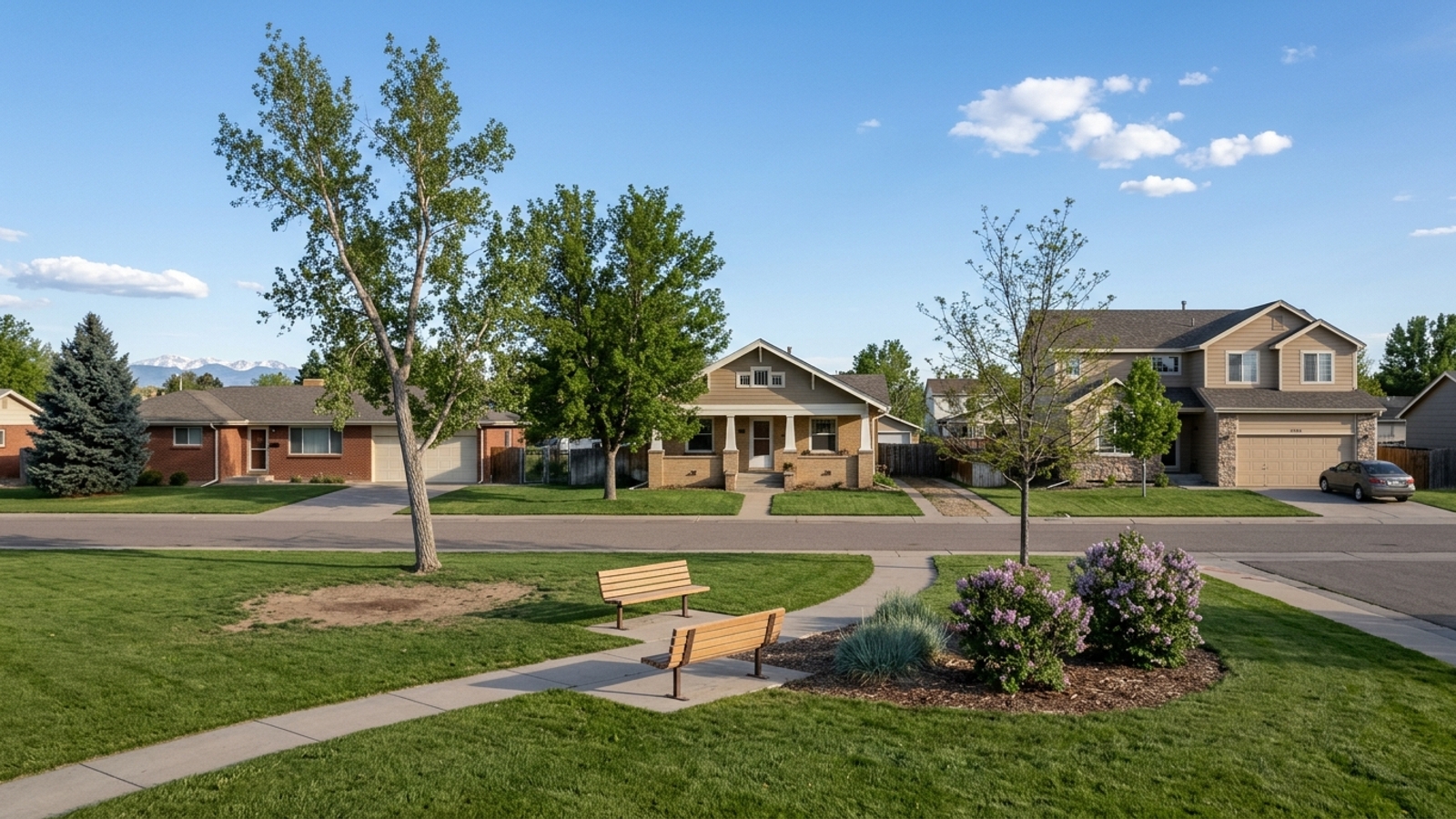
The median sale price for a home in Greeley, CO is currently around $423,158. When you prepare to sell, real estate commissions are usually the largest single cost deducted from your proceeds at closing.
How these fees work shapes your final net. The way buyers and sellers handle agent compensation changed across the country in recent years, and those rules dictate how offers are written today.
Key takeaway
Greeley commissions are negotiable, with no standard rate set by Colorado law, and each point of commission costs about $4,232 on a home at the citywide median. If you are selling a single-family house priced in line with recent sales, a negotiated rate or flat-fee listing is worth pricing out. If you are selling a condo, which tends to sit far longer, full-service marketing often has the most work to do.
Who this guide is for
You are preparing to sell a home in Greeley and want to know what the commission will cost, who pays the buyer's agent, and which fee setup fits your sale.
How much are real estate commissions in Greeley?
In Greeley, where homes take a median 61 days to sell and supply sits at 4.6 months, one point of commission is worth about as much as the 1% sellers typically give up between list and sale price. The right fee setup depends on how hard your property type is to sell.
Single-family homes leave the most room for a leaner fee because they move faster. Condos need the most selling work for the smallest dollar commission. Sellers who negotiate hard over a price drop should look just as closely at the percentage they pay their listing agent. The dollars involved are nearly identical.
What one commission point costs in Greeley
One point of commission at the single-family median costs about $4,335. For a townhouse, it is roughly $3,700 based on 17 recent sales, and for a condo, it drops to about $2,845 based on 23 recent sales. Across all home types, the median sale-to-list ratio is 99%.
A percentage fee does not shrink when your home is easy to sell or grow when it is hard. The dollar amount is tied to the price, regardless of the work involved.
How commission rates are set in Colorado
The Colorado Real Estate Commission regulates licensing and contracts, but it does not set or fix commission rates. Any standard rate you hear about is simply a specific brokerage's own policy. Language in the state's Exclusive Right-to-Sell contract explicitly states that broker compensation is fully negotiable.
Because nothing is standard, two quotes with the same percentage can cover very different services. You have to evaluate what each fee covers to understand the true value.
What changed after the 2024 commission settlement
Since August 2024, buyers must sign a written agreement with their agent before touring a home. This agreement outlines exactly what they owe their agent. At the same time, offers of buyer-agent compensation no longer appear in the northern Colorado IRES MLS, which removed those fields to comply with national settlement terms.
The result is that you may not know the buyer-side cost until an offer arrives. Your net proceeds can move after you have already set your list price.
Commission and time on market by property type
The time and effort required to find a buyer vary widely depending on what kind of home you own. A fee structure that makes sense for a fast-moving property might leave you unsupported on one that takes months to attract an offer.
If you are unsure which category your property falls into, you can review the different home types in Greeley to see where yours fits. Once you know your property type, you can match the commission to the expected workload.
Single-family homes
Single-family homes move the fastest, spending a median 58 days on the market. Recently, 19.8% of these homes sold above their list price. This is the segment where a leaner fee is easiest to justify, because there is less selling work to pay for.
Prices have slipped over the year, though, and hundreds of competing listings are on the market. An overpriced house loses its speed advantage, and a discount fee will not fix that.
Townhouses
Townhouses were the only Greeley home type whose median price went up this year, rising 7.2% based on a small sample of 17 sales. That is not a reason to cut back on marketing, because townhouses currently have six months of supply, the highest inventory level of any property type.
With six months of supply and so few sales, one or two transactions can swing the median. A list price based on that median carries real risk, and a cheaper listing package gives you less help if your first price misses the mark.
Condos
Condos sit the longest, taking a median 100 days to sell, and only 4.3% sold above list price based on 23 recent sales. This is the scenario where full-service marketing and buyer outreach have the most work to do, yet a percentage fee produces the smallest dollar commission. Ask your HOA what it charges sellers for status letters or transfer documents, since those costs sit alongside the commission.
Condo prices fell the most of any type over the year. A flat fee quoted as a dollar amount takes up a bigger share of a condo's lower price, so the savings are smaller here than the ads suggest.
Should you offer to pay the buyer's agent?
The second major cost decision sellers face is whether to cover the buyer's agent fee. Before the recent industry changes, this was a routine part of the listing agreement. Now, sellers can choose to offer compensation upfront, wait to see what a buyer asks for in their offer, or offer nothing at all. Each choice affects the size and type of offers you receive.
Why sellers still offer buyer-agent compensation
Roughly 82.5% of Greeley homes sold at or below their asking price recently. Buyers have the upper hand, and those who have signed agreements obligating them to pay their agent may be unable to write an offer if the seller does not cover that cost. A seller concession to cover some or all of it widens the pool of buyers who can afford to write an offer.
Whatever you offer comes straight out of your proceeds. You cannot take it back once it is written into an accepted contract.
Paying through a seller concession
A buyer can ask in their offer for a seller credit that covers their agent's fee or closing costs. You negotiate this alongside the price, so a concession and a lower price can result in the exact same net amount for you. You can see how these credits work in a typical breakdown of buyer closing costs. Ask the buyer's lender what maximum seller concession their loan type allows before agreeing to a credit.
A large concession can look like a higher sale price on paper while netting you the same as a lower offer, which makes multiple offers harder to compare side by side.
What happens if you offer nothing
If you offer nothing, buyers have to pay their own agent in cash on top of their down payment and closing costs. A recent temporary policy allows veterans using VA loans to pay reasonable buyer-broker fees directly, but those fees cannot be financed into the VA loan amount. The result for the seller is a narrower set of buyers who can make a clean offer.
You save the fee only if a buyer agrees to cover it themselves. Buyers who cannot do so will instead ask for a lower price or a concession, so the saving can disappear at the negotiating table.
Full-service, reduced-rate, flat-fee or for sale by owner
Sellers in Greeley have four main ways to handle the listing side of the sale. Each model shifts a different amount of work onto your shoulders. The right choice depends on your property type and how comfortable you are managing the details of a real estate transaction. The steps for selling a home in Greeley, CO outline these different approaches.
Full-service percentage listing
A full-service agent prices, markets, shows, negotiates offers, handles inspection items, and manages the contract to closing. It fits sellers who want hands-off handling and homes that are likely to sit on the market. Ask every listing agent for a written list of what the fee includes: photography, video, staging advice, open houses, MLS syndication.
On a home that would have sold quickly anyway, you pay the same percentage for less work. That is the trade-off.
Negotiated or reduced rate
This is a lower percentage from a full-service agent, often agreed to in exchange for something specific. An agent might offer a reduced rate for a single-family home in a fast segment, a shorter listing term, or if you plan to buy and sell with the same agent. Ask exactly which services drop at the lower rate.
A discount usually trims something: fewer open houses, cheaper photos, less follow-up. That matters more the longer your home sits.
Flat-fee MLS listing
You pay a set dollar amount to get onto the MLS, while you handle showings, offers, and negotiation yourself, or buy add-ons. Under Colorado law, brokers cannot waive minimum duties even in limited-service arrangements, and any relationship must be set up through a written agreement before the broker performs licensed activity. Ask a flat-fee broker for the full fee schedule in writing, including what is due upfront, what is due at closing, and which tasks cost extra.
The flat fee covers only your side. If a buyer's agent is involved, you may still face that cost, and you take on the negotiating that a percentage fee would have paid for.
Selling for sale by owner
A for-sale-by-owner approach means no listing fee, but you get no MLS exposure unless you pay for it. You handle pricing, disclosures, contracts, and showings yourself. Colorado provides state-approved contract forms, but budget for a real estate attorney's review to ensure everything is handled correctly.
Buyers who arrive with an agent will ask you to cover their fee, so the saving is often only on the listing side. Pricing mistakes are entirely on you.
How to negotiate a listing commission in Greeley
The listing agreement is a binding contract that dictates how much you pay and how long you are tied to the brokerage. Because the rate is not fixed by law, you have room to shape the terms. A close read of the details before you sign ensures you get the services you expect without hidden costs.
Ask what the fee covers
Compare proposals by the services and plan they offer rather than the headline rate alone. Find out who pays for photos, whether staging is included, how the home will be marketed if it is still listed at day 45, and who handles inspection negotiation. Get each proposal in writing.
The cheapest quote on paper can be the most expensive if it leaves out things you end up paying for separately.
Read the listing contract before you sign
Colorado uses state-approved listing forms, so the terms that vary are the blanks you and the agent fill in. Read the listing contract's term, exclusivity type, holdover period, and any withdrawal fee before signing. Ask whether the commission rate changes if the same brokerage brings the buyer.
A long listing term or holdover clause can keep you tied to a brokerage after you have lost confidence in it. Know what you are signing.
Tie part of the fee to results
You can align the fee with the work by using a tiered rate: a lower base with a higher rate above a target price, for example. Other options include a shorter initial term with a renewal, or a lower rate if the home sells within a set number of days. In a balanced market, these structures reward the agent for the outcome you care about.
Aggressive price tiers can tempt you to set the list price high to reach them. In a market where most homes sell at or below asking, that can cost you valuable time.
Sample commission on a Greeley home sale
To see how these choices affect your proceeds, consider a home sold at the citywide median. At a listing fee of about $10,579, the listing side cost is clear. If you also agree to a buyer-agent concession of the same amount, the total commission comes to roughly $21,158.
If you instead choose a flat listing fee of $3,000, your listing side cost drops. If you still offer a buyer-agent concession of about $10,579, your total agent fees would be about $13,579. The buyer-side decision often moves your net proceeds more than the listing rate does.
You can review a breakdown of seller closing costs to learn more about title fees, prorations, and the full timeline. Ask a title company for a seller net sheet at your expected price before choosing a fee setup. This is general information, not legal or tax advice.
How to choose a commission setup for your sale
The right fee structure comes down to your home's appeal and your willingness to do the work. You can check current housing market trends to see how much negotiating power sellers have today.
Ask yourself these questions to guide your decision:
- How quickly do homes like yours sell? If it is a single-family house, read 'Single-family homes' and then 'Negotiated or reduced rate'. If it is a townhouse or condo, read those profiles and then 'Full-service percentage listing'.
- Are you willing to schedule showings, field offers, and negotiate inspection items yourself? If yes, compare 'Flat-fee MLS listing' and 'Selling for sale by owner'. If not, compare 'Full-service percentage listing' and 'Negotiated or reduced rate'.
- Will you offer to cover the buyer's agent, either upfront or only if a buyer asks? Read 'Should you offer to pay the buyer's agent?' before you set a list price.
- How much do you need to walk away with? Run your own numbers the way the sample calculation does, then use 'Tie part of the fee to results' to shape the listing agreement.
If you need help pricing your home or comparing listing plans, reach out to Jamie Eklund of P23 Realty to discuss your options with a local agent.
At a glance
- Median sale price, all homes: $423,158, down 2% year over year (90 days ending 2026-09-30)
- Median sale price, single-family homes: $433,534, down 2.6% year over year (90 days ending 2026-09-30)
- Median sale price, townhouses: $370,004, up 7.2% year over year (90 days ending 2026-09-30; based on 17 townhouse sales, so treat with caution)
- Median sale price, condos: $284,471, down 6.7% year over year (90 days ending 2026-09-30; based on 23 condo sales, so treat with caution)
- Median days on market: 61 all homes, 58 single-family, 76 townhouses (17 sales), 100 condos (23 sales) (90 days ending 2026-09-30)
- Median sale-to-list ratio: 99% all homes, 99.1% single-family, 99.3% townhouses (17 sales), 98.5% condos (23 sales) (90 days ending 2026-09-30)
- Share sold above list price: 17.5% all homes, 19.8% single-family, 5.9% townhouses (17 sales), 4.3% condos (23 sales) (90 days ending 2026-09-30)
- Months of supply: 4.6 all homes, 4.5 single-family, 6 townhouses, 3.6 condos (90 days ending 2026-09-30)
- Homes sold: 308 all homes, including 256 single-family (90 days ending 2026-09-30); active inventory: 466 homes
Greeley real estate commission FAQs
What commission do most realtors charge?
One year after the NAR settlement took effect, a nationwide survey of 806 real estate agents by Clever Real Estate found the average national total real estate agent commission rate was 5.44% in 2025. This was up from 5.32% in 2024, though still below the 5.5% rate five years earlier. That is an average, not a rule, and Greeley rates are set agreement by agreement.
What is the typical real estate commission in Colorado?
According to the 2025 Clever Real Estate agent survey, Colorado had an average total real estate commission rate of 5.74%. This ranked it among the five highest states in the country, behind Michigan, Ohio, Missouri, and Minnesota. At the single-family median price of $433,534, a 5.74% total rate equals about $24,885 in commission.
Will realtors accept a lower listing fee in Greeley?
It depends on the brokerage's policy and the services included. Some agents will accept a listing fee of around half their standard rate, which comes out to about $8,671 on the single-family median. Ask the agent what services change at that lower rate compared with their usual offering.
Do I owe a commission if I find the buyer myself?
It depends on the listing type you sign. Under an exclusive agency listing, the owner agrees a commission is payable only to the named broker, but if the owner sells to a buyer procured without the broker's assistance, no commission is due. Under an exclusive right-to-sell listing, the broker is entitled to a commission even if you find the buyer yourself. Confirm which form you are signing before you agree to the terms.
Do I pay a commission if my listing expires without a sale?
Generally, no commission is owed for an unsold listing. Under the state's Exclusive Right-to-Sell Listing Contract, though, a holdover clause can make a commission due if you later sell to a "Submitted Prospect" introduced during the listing period. Note the holdover length written into your contract.
Can one agent represent both the buyer and the seller in Colorado?
Yes, but they must operate under specific rules. Under Colorado's real estate licensing statute, a broker must act as either a Transaction-Broker or a Single Agent, and since August 12, 2026, either relationship must be set up through a written agreement. Ask whether the commission rate changes if the agent handles both sides of the transaction.
Is the commission still owed if the buyer backs out before closing?
It depends on the circumstances of the termination. Under the current Commission-approved Exclusive Right-to-Sell Listing Contract, commission is earned on any sale during the listing period or on the broker finding a ready, willing, and able buyer. Read the contract's "when earned" and seller-default terms, since a seller who backs out can be treated differently from a buyer who backs out.
Can I deduct real estate commissions when I sell my home?
Yes, selling expenses generally reduce the amount realized on the sale. Per IRS Publication 523, the amount realized on a home sale is the selling price minus selling expenses, which include commissions, advertising fees, legal fees, and loan charges. Confirm with a tax professional, since how much of your gain is taxable depends on your specific situation.
Sources
- Redfin: Data Center
- Colorado Department of Regulatory Agencies: Real Estate Commission Bulletins
- National Association of Realtors: Settlement FAQ
- IRES MLS: 2024 Wrap Up
- Department of Veterans Affairs: Circular 26-24-14
- Colorado General Assembly: HB26-1426
- Colorado Department of Regulatory Agencies: Exclusive Right to Sell Listing Contract
- Colorado Real Estate Manual: Listings
- Yahoo Finance: Agent Commissions Edge Higher in 2025
- IRS: Publication 523