


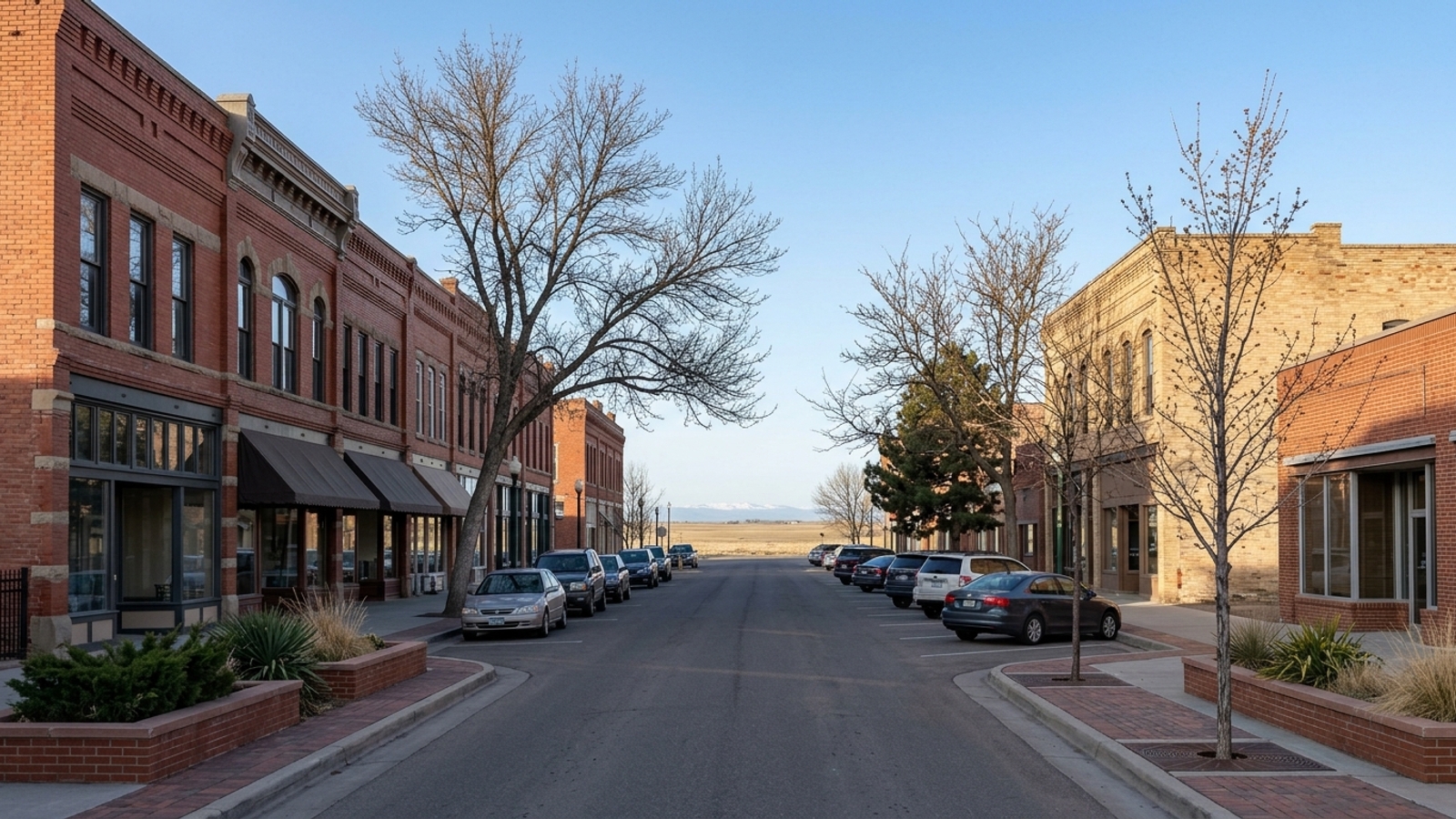
Greeley sits in Northern Colorado where the university community and agriculture have always kept the city moving at its own pace. Before you commit to a neighborhood and weigh the pros and cons of living in Greeley, understand how the city functions as a place to travel through every day - whether on a good Tuesday afternoon or in January, during rush hour, with a 6 a.m. flight to catch.
The median home price in Greeley right now is roughly $425,000, and homes are sitting an average of 55 days on the market. That's a reasonably accessible entry point compared to a lot of Front Range communities, and a lot of buyers are figuring out whether the commute math works before they make an offer.
From driving routes and airport transfers to local buses and campus shuttles, you have more options than most people expect - though some of those options have real limitations you should know about upfront.
Arriving in Greeley, CO
Greeley doesn't sit directly on I-25, which catches some people off guard. The primary north-south freeway in Colorado runs just west of town and connects the area to Denver, Fort Collins, and Loveland - but you'll still need a mix of state and US highways to close that last stretch into the city.
U.S. Highway 85 runs north-south directly through Greeley, with a Business Route that cuts right through downtown. For east-west travel, U.S. Highway 34 connects Greeley to I-25 near Loveland, and State Highway 392 handles commuter traffic between Windsor and Greeley.
Nearest Commercial Airports
Denver International Airport (DEN) is the closest commercial airport to Greeley - roughly 39 to 40 miles away in a straight line from the city center. The actual driving distance lands between 56 and 63 miles depending on the roads you take.
Most travelers rent a car or book a shuttle to cover that final leg.
Traveling from the Denver Area
If you're flying in from out of state, you'll almost certainly land at Denver and drive north. The route follows I-25 before cutting east onto Highway 34 - it carries the bulk of regional traffic heading into Northern Colorado. Plan for heavier volume during standard morning and evening commute windows.
Driving Distances and Commute Times
Denver to Greeley is approximately 61.5 to 63 miles. Under normal traffic conditions, you're looking at 1 hour and 9 minutes to 1 hour and 13 minutes, and most drivers use I-25 North to make that trip. Winter weather or a minor accident can push those numbers up, so daily commuters need to build some cushion into their schedule.
Reaching Downtown Greeley
U.S. Highway 85 Business Route gives you direct access to the downtown core. If you're coming from the west via U.S. Highway 34, you'll transition to local streets to reach the businesses and municipal buildings downtown. The grid layout in the center of town makes finding a specific address pretty straightforward once you've done it a few times.
Driving Distance and Time from Denver
That hour-plus drive is a daily reality for a lot of Greeley residents, and you need to be honest with yourself about what over two hours of round-trip driving feels like over time. Buyers moving from out of state weigh this against the housing costs here - and with local homes selling at an average of 99% of their list price, this is an active market. The distance to Denver is just a standard part of the tradeoff.
Public Transit Options in Greeley
Greeley's public transit system is Greeley-Evans Transit (GET), operated by the City of Greeley. GET runs fixed-route, paratransit, and Call-n-Ride services Monday through Saturday across Greeley, Evans, and Garden City.
As of 2026, the system operates 8 distinct routes. Route 1 serves Aims College and Northridge High School. Route 3 connects Downtown, Island Grove, and Greeley West High School. Route 4 links Downtown, Greeley Central High School, the hospital, and the Greeley Mall. The system also runs the regional Poudre Express, connecting Greeley to Fort Collins via Windsor - which is probably the most useful line for people commuting regionally.
Campus Shuttles and Trolley Service
Greeley doesn't have a traditional streetcar or trolley system. What GET does operate is a free campus shuttle called the Boomerang for the University of Northern Colorado, helping students and faculty move across campus without hunting for parking every day. It runs on a regular schedule during the academic year.
Transit Fares and Passes
The regional Poudre Express costs $1.50 per trip and includes free transfers - a reasonable deal if Fort Collins is part of your weekly routine.
For local fixed routes, GET ran a free-fare promotional program from June 1 through August 31, 2025. You'll want to check directly with the transit agency for the current daily fare rates on standard local routes.
Do You Need a Car in Greeley?
Short answer: yes, for most people. The transit network exists and it works, but the city's layout is built around personal vehicles, and that's especially true once you're outside the city limits.
With around 450 homes currently on the market in the area, buyers have real options across a range of neighborhoods - but most of those neighborhoods require a short drive to reach major shopping centers or employers. That's just the reality of how Greeley is structured.
Walkability in the City
Downtown and the area immediately surrounding the University of Northern Colorado are the most walkable parts of the city. In those specific pockets, you can get to local dining and small shops on foot without much trouble.
Outside those central areas, sidewalks exist but the distances between homes and commercial areas make walking impractical for daily errands. Suburban subdivisions were designed with drivers in mind.
Rideshare and Local Ride Services
Uber and Lyft operate throughout Greeley, and traditional taxi services are available for those who prefer to call ahead. Both work well for occasional trips or a night out. Leaning on them for a daily commute to Denver or Fort Collins gets expensive very quickly.
When Owning a Car Makes Sense
If your job is in Loveland, Fort Collins, or anywhere outside Greeley's core, a personal vehicle isn't optional - it's the plan. Same goes for families managing multiple school drop-offs or regional sports schedules, and for anyone who wants easy access to the Rocky Mountains on weekends. For most households here, a car is just a baseline assumption.
Airport Transfers and Shuttle Services
Getting between Greeley and Denver International Airport without a car is possible. Express Arrow provides daily bus and shuttle departures between Greeley and Denver, and you can purchase tickets at the GET office at 1200 A Street in Greeley. Omnibus Express also runs a bus service connecting Denver and Greeley.
Shuttle Service from Denver to Greeley
These shuttles pick up at the airport terminal area and drop passengers at designated spots in Greeley. With a drive of over an hour, it's a comfortable way to decompress after a flight without worrying about parking logistics. Luggage is typically included in the ticket price.
Booking Regional Bus Travel
Book in advance. Walk-up availability isn't guaranteed, especially during busy holiday travel periods. Schedules vary by day and provider, so check departure times directly with Express Arrow or Omnibus Express before you assume you can catch a particular run.
Specialized and Accessible Transportation
GET provides paratransit services and a dial-a-ride program that runs on Sundays and after standard fixed-route service ends. The agency also offers free travel training classes to help riders - including those who need extra assistance - learn how to use the fixed-route bus system with confidence.
Senior Transportation Services
Greeley-Evans Transit is listed as a transportation resource for seniors through Weld County's Senior Access Points program, which uses the standard bus service throughout Greeley and Evans to help seniors stay mobile. There's no dedicated senior-only service beyond the general paratransit options, but the existing network covers the majority of the city limits.
Non-Emergency Medical Transport
GET operates a curb-to-curb Call-N-Ride Shuttle specifically to the UC Health Campus for medical appointments - a practical option for patients who can't easily manage standard bus transfers. You can schedule a trip by calling the GET dispatch office anywhere from one to fourteen days in advance.
Frequently Asked Questions
How do you get to Greeley, CO?
You can reach Greeley by driving via U.S. Highway 34, U.S. Highway 85, or State Highway 392, all of which connect to or run near Interstate 25. If you're flying, Denver International Airport is the closest major hub.
How far is Greeley from Denver?
The direct drive is approximately 61.5 to 63 miles, and it typically takes 1 hour and 9 minutes to 1 hour and 13 minutes via I-25 North.
Is there an airport shuttle from Denver International Airport to Greeley?
Yes. Express Arrow and Omnibus Express both provide regional bus and shuttle services between Denver and Greeley.
Do you need a car in Greeley?
Yes, owning a car is the most practical way to get around. Local buses and walkable pockets exist downtown, but most residential neighborhoods require driving for daily errands and commuting.
Is Greeley walkable?
Downtown Greeley and the university campus area are walkable. The majority of the city is spread out, though, making walking impractical for most daily commutes or grocery runs.
Does Greeley have public transportation?
Yes. The city operates Greeley-Evans Transit (GET), which provides fixed-route buses, a campus shuttle, and paratransit services Monday through Saturday.
How much does the bus cost in Greeley?
The regional Poudre Express route costs $1.50 per trip and includes free transfers. For standard local routes, GET ran a free-fare promotion in the summer of 2025, so check current rates directly with the agency before you plan around a specific number.