


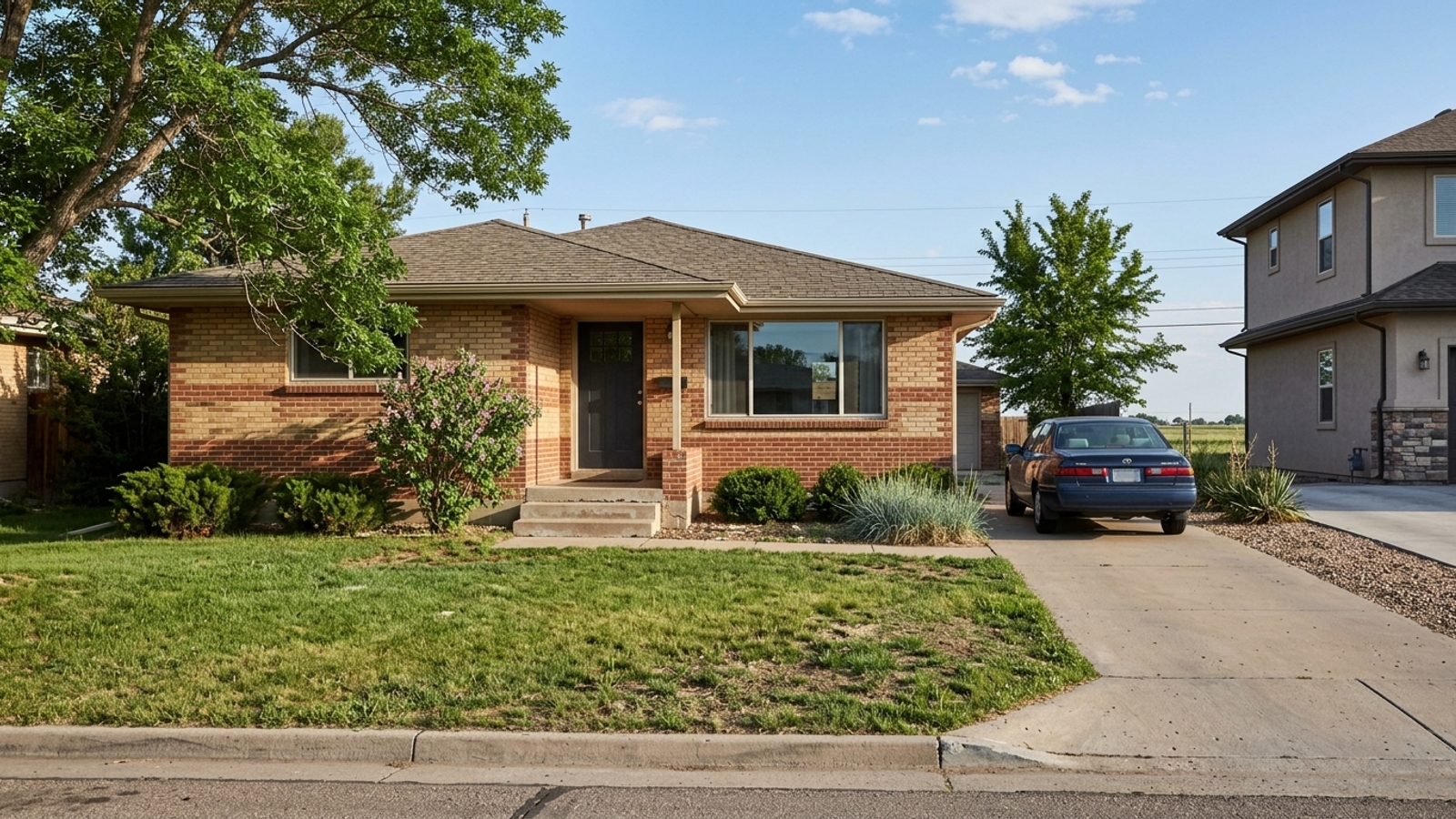
Buyers looking at the Colorado Front Range eventually land on the same question: is the Denver address worth what it costs, or does Greeley make more sense? It's not a simple answer. It comes down to your budget, how many hours a week you're willing to spend on I-25, and what you need from the place you live. Ultimately, the pros and cons of living in Greeley are unique to every buyer. Both cities have real advantages - they're just different ones.
Denver gives you immediate access to major employers, professional sports, and extensive transit networks. Greeley sits about 60 miles to the north and gives you a lower entry point into the housing market alongside a growing local economy anchored by education and agriculture. The data for both markets is worth understanding before you decide.
Real Estate Prices and Market Trends
The median home sale price in Denver recently reached $616,000, according to closed-sale data from the Denver Metro Association of Realtors. Greeley's median sits at roughly $425,000. That $190,000 gap is the primary reason buyers start looking north toward Weld County when Denver prices push them out.
Greeley currently has about 457 active listings - roughly four months of supply. Homes there spend an average of 55 days on the market before closing, which sounds relaxed until you notice that about 24% of Greeley homes still sell above asking price. Slower pace doesn't mean you can drag your feet.
Comparing Home Prices and Inventory
Denver's baseline costs run higher across almost every neighborhood, and single-family homes under $600,000 draw real competition. A buyer approved for $500,000 in Denver is mostly looking at condos or smaller townhomes. That same budget in Greeley can get you a detached single-family home with a yard.
It's a straightforward trade-off - location versus purchasing power.
Home Styles and Yard Space
Greeley's housing stock runs from early-1900s bungalows and Victorian homes in the historic downtown area to newer construction on the western edge of the city. If square footage and lot size matter to you, you'll generally find better options here than in the dense Denver core.
Denver's inventory leans toward attached housing - high-rise condos, historic single-family homes on smaller urban lots, and infill townhomes for buyers who want a modern build. Newer construction in Denver proper usually means going vertical or heading out to the suburbs.
Cost of Living and Everyday Expenses
Housing costs are where the gap between these two cities shows up. Data from BestPlaces puts Denver about 12.5% more expensive overall than Greeley, with housing costs running 44.4% higher. Other sources, like Salary.com, put the overall cost-of-living difference closer to 0.6% when you factor in all local expenses - so the housing number is doing most of the heavy lifting in that BestPlaces figure.
Your mortgage payment is only part of the picture. Commuting costs, property taxes, and everyday expenses all factor into what homeownership costs you month to month.
Local Tax Rates and Utility Costs
Weld County, where Greeley is located, has a median effective property tax rate of approximately 0.52%. The county uses over 1,522 tax areas, with mill levies ranging from about 60 to 148 mills depending on the specific neighborhood and utility district - so your rate will vary by address.
Denver County's effective residential property tax rate runs slightly lower, generally between 0.44% and 0.55%, with a combined baseline mill levy of roughly 79.6 mills split between local government and the school district. The rate is lower, but Denver homeowners typically pay more in total dollars because their assessed values are higher. A lower rate on a $616,000 home still produces a larger bill than a higher rate on a $425,000 one.
Daily Costs and Budgets
Groceries, healthcare, and utilities tend to run comparably across the Front Range. The real variable in your monthly budget is transportation. If you buy in Greeley and work locally, you keep those costs low. If you buy in Greeley and commute to Denver, you're paying for that gap in other ways - fuel, vehicle wear, and time.
Commuting and Regional Transportation
The distance from Greeley to Denver runs roughly 55 to 65 miles depending on your route. Most commuters take either US Highway 85 North or Interstate 25.
Under typical driving conditions, plan on an hour to an hour and 15 minutes. If you're seriously considering a Greeley purchase with a Denver job, drive the route during your actual commuting hours before you make a decision. Traffic data only tells you so much.
Commuting by Car on I-25 and US-85
The I-25 North route covers about 60 miles and runs around 65 minutes without delays. US-85 North is slightly longer at 65 miles and closer to an hour and 15 minutes.
Rush hour is the honest variable here. Traveling between 7:00 AM and 9:00 AM, or between 4:00 PM and 7:00 PM, can add up to 30 minutes each way. Over a five-day work week, that adds up fast, and it's worth building into how you think about this trade-off.
Regional Bus Services
The Bustang service runs routes along the Front Range, connecting northern Colorado communities to downtown Denver. It takes the stress of I-25 off your plate, but it requires locking yourself into a timetable. Buyers who need schedule flexibility tend to keep a personal vehicle as their primary option regardless.
Local Amenities and Community Features
Greeley's economy centers on agriculture, energy services, and education, anchored by the University of Northern Colorado (UNC). The city has local parks, community events, and growing commercial districts.
Denver is a different scale entirely - distinct neighborhoods, major entertainment venues, a dense urban core. Buyers pay a premium there for proximity to all of it, and that premium is real.
Greeley's Local Scene
The most significant development on Greeley's radar right now is the West Greeley Catalyst & Cascadia project - a 300-acre mixed-use district that broke ground in September 2025 and is intended to bring more retail and dining to the western side of the city. The downtown area in East Greeley holds its historic architecture and functions as the hub for local businesses. UNC contributes events, facilities, and cultural programming throughout the year that the broader community draws on.
Denver's Metro Amenities
Denver has Coors Field, Ball Arena, and Empower Field at Mile High near the downtown core. Washington Park. The RiNo Art District, Lower Downtown (LoDo), and Cherry Creek for dining, shopping, and nightlife. If walkability to that kind of environment is on your must-have list, Greeley isn't going to satisfy it - Denver is what you're looking for.
Frequently Asked Questions
Is it cheaper to buy a house in Greeley or Denver?
Yes, Greeley is cheaper. The median home price in Greeley is roughly $425,000 versus Denver's median of around $616,000. Housing costs in Denver run about 44% higher than in Greeley.
What is the commute like between Greeley and Denver?
The drive covers 55 to 65 miles via I-25 or US-85 and takes about 60 to 75 minutes under normal conditions. During morning and evening rush hours, heavy traffic can add up to 30 minutes to that. The Bustang regional transit service is also available for commuters who prefer not to drive.
What types of homes are available in Greeley compared to Denver?
Greeley offers a mix of early-1900s bungalows, Victorian homes, and newer single-family builds on larger lots. Denver has a higher concentration of attached housing, condos, and historic urban homes on smaller footprints. A $500,000 budget gets you a detached home in Greeley; in Denver, that same number mostly puts you in condo or townhome territory.
Do homes in Greeley, CO appreciate at the same rate as the Denver metro area?
Recent data shows different short-term trends. Denver saw a 1% year-over-year increase in its closed-sale median price. Greeley's median sale price showed a slight 1.5% decrease year-over-year, though roughly 24% of homes there still sell above asking price.
What are the biggest lifestyle and amenity differences between living in Greeley vs Denver?
Greeley offers a smaller-city environment anchored by the University of Northern Colorado and growing commercial areas like the West Greeley Catalyst project. Denver provides major metropolitan amenities - professional sports venues like Ball Arena and Coors Field, and dense entertainment districts like LoDo and RiNo.
How do property taxes in Greeley, CO compare to Denver and its surrounding suburbs?
Weld County, covering Greeley, has a median effective property tax rate of about 0.52%. Denver County's effective rate is slightly lower, generally around 0.48%. Because home values are much higher in Denver, though, the actual dollar amount paid in annual property taxes is typically higher there than in Greeley.