


If you're shopping along the I-25 corridor in northern Colorado, you've probably already figured out that Greeley and Fort Collins keep coming up. They anchor this stretch of the Front Range, and they're genuinely different markets - different price points, different inventory levels, different feels. Both have a university driving the local economy, UNC in Greeley and CSU in Fort Collins, and both have been seeing steady activity through 2026 as buyers weigh the pros and cons of living in Greeley.
What separates them, practically speaking, comes down to your budget, the architecture you want to live in, and how you feel about the commute along Highway 34. Fort Collins carries a higher median price. Greeley gives buyers a real shot at staying under the half-million mark. The property tax picture, the inventory, and the home styles all look different too, and those differences matter when you're doing the actual math.
Comparing Home Prices and Local Markets
Greeley's median home sale price sits at approximately $424,669 right now. Homes are averaging 55 days on the market, sellers are getting about 99.36% of their list price, and there are 457 active listings - roughly four months of supply. That's a reasonable amount of inventory to work with.
Fort Collins is a different conversation. The median home value there has reached roughly $569,102, and Larimer County as a whole is running around $557,840. If you're moving from Greeley's price range into Fort Collins, expect a meaningfully larger down payment and higher monthly carrying costs for a comparable property.
Property Tax Rates in Weld and Larimer Counties
Greeley sits in Weld County, which carries a median effective property tax rate of 0.52% - translating to a median annual tax bill of about $2,434. Fort Collins is in Larimer County, where the rate ticks up slightly to 0.56%. Because home values in Larimer County average around $551,300 versus Weld County's $456,313, that small rate difference compounds, and the median annual tax bill in Larimer County comes out to approximately $3,054. Both counties come in well below the national median effective rate of 1.02%, which is worth keeping in perspective.
Historic Architecture and Home Styles
Fort Collins built its reputation on Old Town, a historic district that reflects the city's roots as a railroad and university town. You'll find Late Victorian and Romanesque architecture there, with Italianate, Queen Anne, and Craftsman bungalows in the adjacent neighborhoods. It's genuinely distinctive, and buyers who want that specific environment tend to know it pretty quickly when they walk through it.
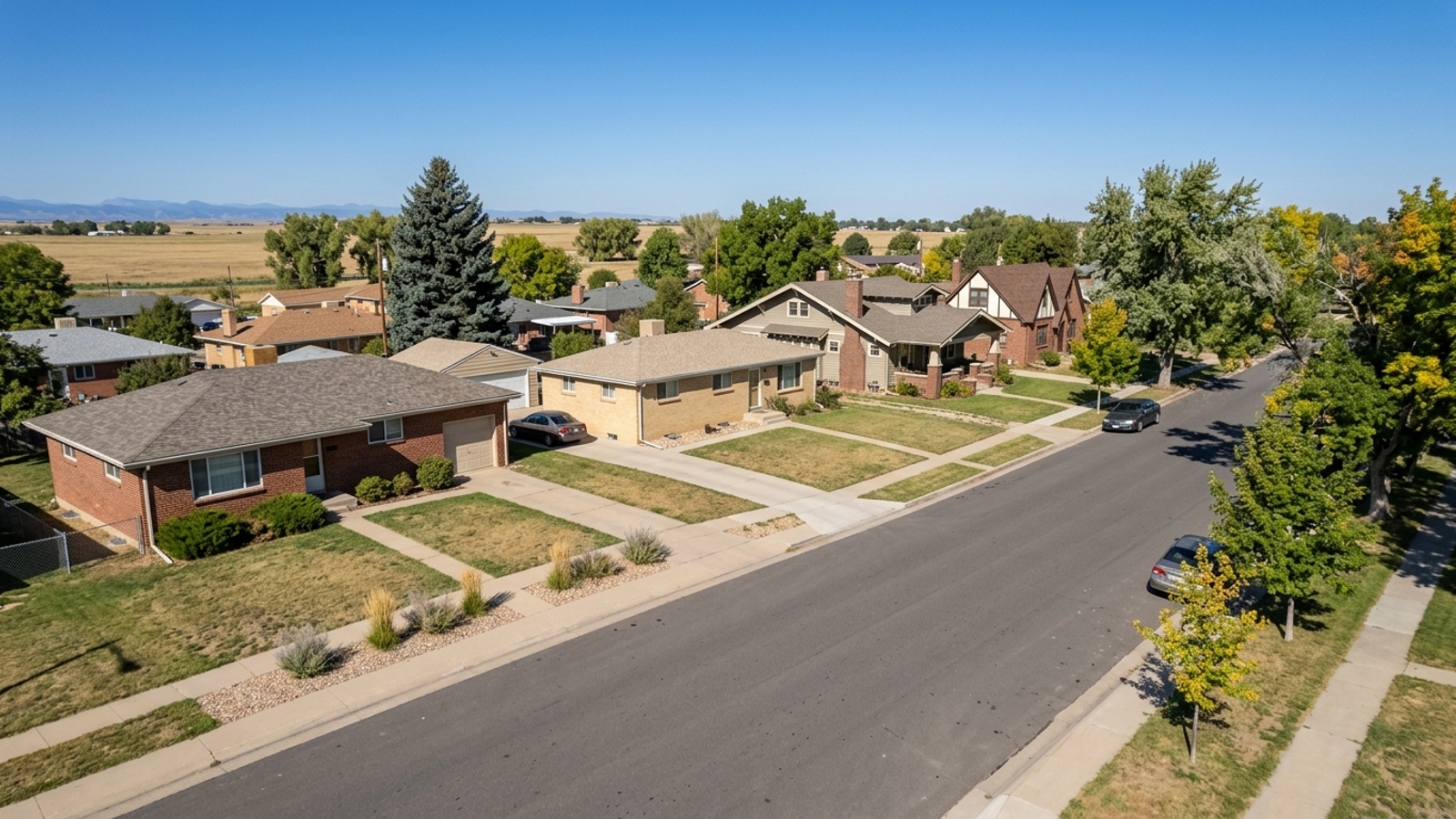
Greeley's historic core runs Gothic Revival, Italianate, Queen Anne, Classical Revival, and Colonial Revival - buildings from the late 1800s through the 1920s. The Woodbury House is a notable Gothic Revival example; the Weld County Courthouse, built in 1917, is Classical Revival. Head outward from the center and you'll find Craftsman and Tudor bungalows alongside mid-century brick ranch homes, which have their own appeal for buyers who want solid construction and manageable square footage without the Old Town price tag.
Commuting and Highway Access
The main route between Greeley and Fort Collins is Highway 34, which runs east to west and connects Greeley directly to I-25 and the southern edge of Fort Collins. I want to be direct about this: drive it during your actual commute hours before you make a decision. The mix of two-lane and four-lane sections behaves very differently at 7:30 a.m. than it does on a Saturday afternoon.
For anyone heading south toward Denver, Fort Collins residents reach I-25 further north, while Greeley residents drive west on Highway 34 first to hit the junction. If you're looking at homes on the eastern side of Greeley, add that extra mileage to your mental model of what the interstate commute looks like day to day. Neighborhood location within each city matters, not just which city you pick.
Local Amenities and the Economy
CSU and UNC aren't just academic institutions - they're economic engines. Both universities bring in seasonal populations and support the retail and dining districts that surround them, which shapes the day-to-day character of each city in ways that go beyond the campus itself.
On the outdoor side, the Poudre River runs through the region and the Poudre River Trail gives cyclists and runners miles of paved pathway. Fort Collins is closer to the foothills, so mountain trail access is quicker from there. Greeley is further east on the plains, with municipal parks and open space that work well if you prefer flat terrain or aren't prioritizing mountain proximity.
Deciding Between Greeley and Fort Collins
If your ceiling is somewhere around the low-to-mid $400s and you want to keep property taxes down, Greeley is the practical answer. The median is around $424,669, the Weld County rate is 0.52%, and you'll find established neighborhoods with mid-century brick ranches and Craftsman bungalows that represent real value.
Fort Collins buyers are usually after something specific - proximity to the foothills, the Old Town architectural landscape, or the CSU corridor. The $569,102 median reflects genuine demand for those things, not just general inflation. Tour open houses in both cities. What $450,000 buys you in Greeley and what it buys you in Fort Collins are different enough that the comparison is worth making in person.
Frequently Asked Questions
Is it more expensive to buy a house in Greeley or Fort Collins?
Fort Collins is more expensive. The median home value there is roughly $569,102, compared to Greeley's median sale price of approximately $424,669. Property taxes also run higher in Fort Collins because of both a higher tax rate and higher overall home values.
What is the commute like between Greeley and Fort Collins?
It runs primarily on Highway 34 and the I-25 corridor. Highway 34 connects Greeley on the east to I-25 and Fort Collins to the west. Traffic levels vary depending on the time of day, so testing the drive during your actual commute hours is worth doing before you commit to a neighborhood.
What types of homes are available in Greeley vs Fort Collins?
Fort Collins features Late Victorian and Romanesque architecture in its Old Town district, surrounded by Craftsman bungalows. Greeley's historic core offers Gothic Revival, Italianate, and Classical Revival homes, with mid-century brick ranches and Tudor bungalows in the surrounding neighborhoods.
Is the housing market more competitive for buyers in Greeley or Fort Collins right now?
Greeley currently has about four months of supply and 457 active listings, with homes spending roughly 55 days on the market and selling for about 99.36% of list price. Fort Collins continues to see strong demand, though median values there have dipped slightly - down 1.0% year-over-year.
What is the biggest trade-off when choosing to buy a home in Greeley instead of Fort Collins?
Price versus proximity to the foothills. Greeley offers a lower median home price and lower median property taxes, but it's further east on the plains. Fort Collins sits closer to the mountains and I-25, and that location costs more.
Are property taxes different in Greeley compared to Fort Collins?
Yes. Greeley is in Weld County, which has a 0.52% median effective rate and a median annual bill of $2,434. Fort Collins is in Larimer County, where the rate is 0.56% and the median annual bill runs roughly $3,054.