


According to the 2020 U.S. Census, Greeley's population was 108,795 - that makes it the tenth most populous city in Colorado. If you're looking at northern Colorado and trying to stretch your budget, this is one of the first markets worth a serious look. There are distinct pros and cons of living in Greeley, CO, but the financial benefits stand out. The local economy and housing market have both grown steadily, and the lower housing costs compared to the immediate Denver metro are a real draw.
Greeley is served by Weld County School District 6 and is home to the University of Northern Colorado, founded in 1889. The housing stock runs from century-old downtown bungalows to brand-new suburban builds, so there's genuine range here depending on what you're after.
Where to Find Greeley, CO on the Map
Greeley sits about 49 to 50 miles north-northeast of Denver, the state capital, and serves as the principal city of the Greeley, CO Metropolitan Statistical Area - which itself is part of the larger Denver-Aurora Combined Statistical Area. The highway system connects you to Denver and the Rocky Mountains without much difficulty, though you'll want to factor in winter weather if you're planning to commute regularly.
Weld County and Metro Connections
Greeley is the county seat and the most populous city in Weld County, Colorado. The county's identity is shaped by agricultural roots alongside expanding residential development - and that combination gives Greeley a different feel than the bedroom communities closer to Denver.
If you're planning to work south of here, drive the route at rush hour before you commit. The highway itself is straightforward. Winter is the variable.
Local ZIP Codes
Greeley is covered by six primary ZIP codes within Weld County. Most residential and commercial activity falls under 80631 and 80634. The post office uses 80632 and 80633 for P.O. boxes, and two additional codes - 80638 and 80639 - serve specific local entities.
What to Know About Living in Greeley, CO
Life here is shaped by two anchor institutions: the University of Northern Colorado and Aims Community College, a two-year junior college. Both bring consistent foot traffic and activity to the central parts of town, which gives the area a different energy than a purely residential suburb would.
Beyond the university influence, Greeley maintains a distinct identity rooted in Weld County's agricultural history. You're not getting a scaled-down version of Denver here - you're getting something with its own character, suburban neighborhoods, university amenities, and a connection to the land that still shows up in how the community operates.
Pros and Cons for Buyers
The case for buying here starts with price. You'll generally get more square footage for your dollar than you would closer to Denver, and that gap is meaningful for buyers who are watching their budget carefully.
The honest trade-off is distance. Fifty miles to the state capital is a real commute, and if your job is in the Denver metro, that's something to pressure-test before you sign anything. Drive it in the morning. Drive it home at night. The local job market is growing, but plenty of residents still commute regionally.
Local Lifestyle and Vibe
The University of Northern Colorado brings arts programming, athletics, and cultural events to town on a regular basis. Aims Community College adds to that economic and educational infrastructure. Layered underneath all of it are the agricultural traditions that still surface in local festivals and in the surrounding Weld County landscape. Newer retail centers and ongoing suburban expansion sit alongside that history rather than replacing it.
Cost of Living and Housing Prices in Greeley, CO
The median sale price for a home in Greeley is currently around $424,669. Homes are spending an average of 55 days on the market before selling, and there are currently 457 available homes in inventory - enough to give you real options across different price points. Sellers are getting roughly 99% of list price, so this isn't a market where low offers are gaining much traction.
The housing stock itself covers a wide range, from downtown historic properties to new suburban construction on the western corridors.
Property Taxes and Home Values
The median effective property tax rate in Greeley is approximately 0.48% - below the national median of 1.02% and slightly under the Colorado state median of 0.50%. That works out to a median annual tax bill of around $1,841.
Your property tax levy will reflect contributions from Weld County, School District 6, and Aims Community College. Worth building those into your monthly payment estimates early rather than being surprised at closing.
Rent and Everyday Expenses
If you're not ready to buy, median rent in Greeley runs between $1,388 and $1,492 per month depending on the data source and time of year. Groceries and utilities track with regional averages for northern Colorado. The lower housing costs do a lot of the heavy lifting in keeping overall expenses manageable.
Neighborhoods and Housing Options
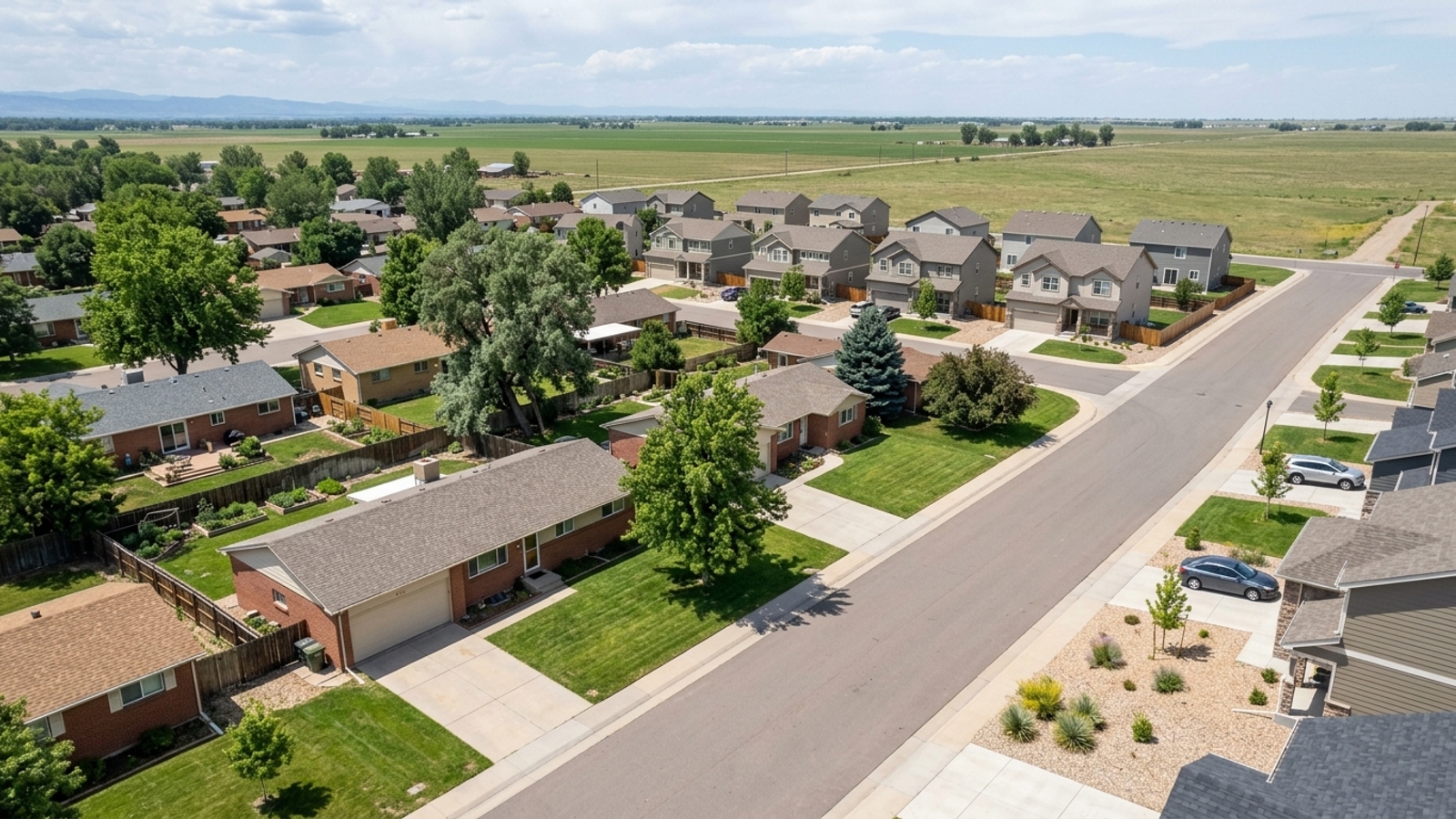
The city breaks down fairly cleanly between its western growth corridors and its older established core. They offer genuinely different experiences - different architecture, different lot sizes, different neighborhood rhythms - so it's worth spending time in both before you decide where to focus.
West Greeley and Northridge
West Greeley is where most of the new construction action is. Subdivisions like Lake Bluff, Northridge Estates, and Westgate feature modern builds with contemporary floor plans. Northridge draws a lot of first-time buyers specifically - newer single-family homes at price points that work for people earlier in their homeownership journey. Development in these western and northern corridors is still ongoing, so if new construction is a priority, this is where your search should be centered.
Downtown and East Greeley
Downtown and East Greeley - including the Sunrise area - tell a different story. Historic bungalows, Victorian homes dating to the early 1900s, mature trees, and established streetscapes. You're also closer to local businesses and city offices, which matters to buyers who want to walk to things rather than drive to everything.
If character and age of construction are what you're after, the older homes here are worth a careful look.
Dining, Events, and Things to Do in Greeley
The Greeley Independence Stampede is the marquee event on the local calendar - a major rodeo festival held in June and July that draws visitors and competitors from throughout the West. Outside of that, the downtown district functions as the main gathering point for dining, retail, and community events year-round.
Restaurants and Shopping
Downtown Greeley has local restaurants, coffee shops, and independent retailers clustered in a walkable layout that's well-suited for evening dining. The larger retail centers and grocery chains are spread through the newer western and northern corridors, so most residential areas have convenient access to familiar brands. The dining scene leans toward casual eateries and local breweries rather than anything particularly upscale - which may or may not match what you're looking for.
Annual Events and Recreation
The University of Northern Colorado runs a full calendar of concerts, theater productions, and collegiate athletics that are open to the public. That's a meaningful quality-of-life asset that doesn't show up in the housing data but matters once you're living here.
City-maintained parks and recreational facilities round out the outdoor options during Colorado's milder seasons.
Where to Stay When Visiting Greeley
If you're making a scouting trip to tour homes, where you stay shapes what you see. Several hotels operate near the university and the downtown district, and being centrally located makes it easier to move between neighborhoods without reorienting yourself every few hours.
Hotels in and Around Downtown
Booking near downtown puts you close to the historic districts and local dining - useful for getting a feel for the city's original architecture and walkable core. If you'd rather have quick highway access for covering the broader Weld County area, there are lodging options along the main routes connecting Greeley to Denver that work well for that.
A weekend is the minimum you need to do this right. Drive the distance to Denver, walk the downtown streets, and get to a few open houses in West Greeley. That combination will tell you more than any article can.
Frequently Asked Questions
Is Greeley, CO a good place to live?
Yes, it offers a lower cost of living compared to the immediate Denver metro. The city features access to higher education, local festivals, and a mix of historic and new homes.
Where is Greeley, CO located?
Greeley sits about 49 to 50 miles north-northeast of Denver. It is the county seat of Weld County, Colorado.
How much does it cost to live in Greeley, CO?
The median home price is currently around $424,669, and the median effective property tax rate is about 0.48%. Median rent typically ranges between $1,388 and $1,492 per month.
Is Greeley, CO safe?
Like any city of over 100,000 residents, safety varies by neighborhood. Buyers should review data from the local police department to evaluate specific areas before purchasing.
What are the best neighborhoods to buy a house in Greeley, CO?
West Greeley and Northridge offer newer subdivisions like Lake Bluff and Westgate. Buyers looking for historic bungalows should explore Downtown and East Greeley.
Where should I stay when visiting Greeley on a relocation scouting trip?
Staying in or near downtown Greeley provides easy access to the university and local restaurants. Hotels near the main highways are convenient for exploring the wider Weld County area.