


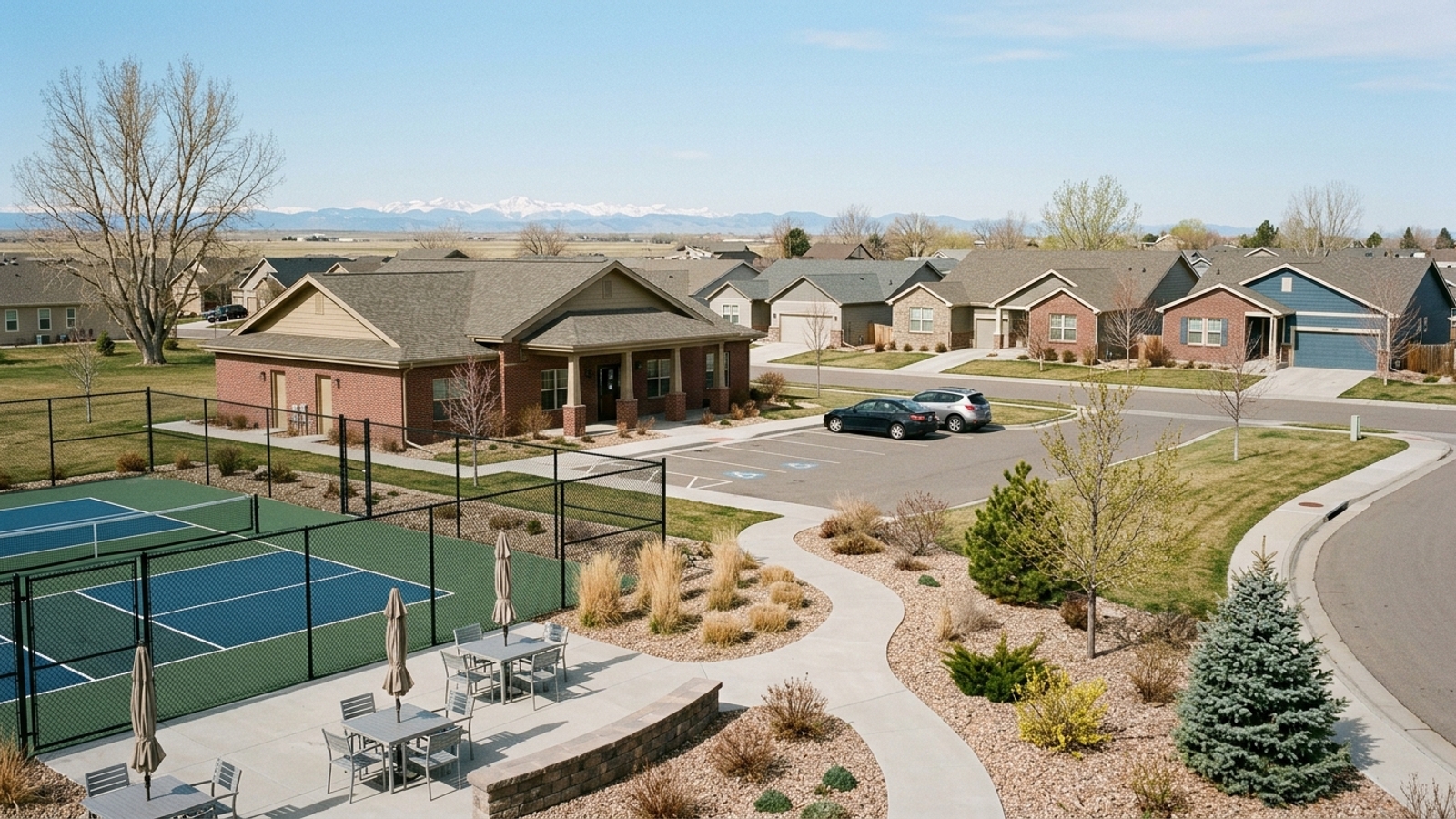
The median home sale price is currently around $424,669, which is a major factor in the pros and cons of living in Greeley, CO. Homeowners looking to downsize or move into a specialized community often use their existing equity to fund that transition.
With roughly 457 homes on the market and a median time on market of 55 days, the local landscape is stable enough that sellers aren't rushing - and buyers in the age-restricted segment will find options ranging from independent apartments to full continuing care facilities.
An Overview of 55+ Living in Greeley, Colorado
Federal law allows certain neighborhoods to restrict residency based on age. In Greeley, those developments are built around specific amenities, predictable maintenance, and a community of peers.
The structure of these neighborhoods varies more than most people expect. Some operate as traditional subdivisions with a homeowners association. Others function as rental complexes or multi-tiered care facilities. That distinction matters a lot when you're figuring out what you can afford.
Types of Communities Available
Greeley offers a mix of independent living, assisted living, and continuing care retirement communities. You can purchase a detached home, buy into a townhome, or rent an apartment - each with its own financial obligations. Standalone homes typically involve standard property taxes and HOA dues. Rental facilities tend to bundle utilities, meals, and maintenance into one monthly fee.
How the 80/20 Age Rule Works
The Housing for Older Persons Act (HOPA) is the federal law that governs age-restricted developments. To keep that status, a community must ensure at least 80% of its occupied units include one resident who is 55 or older.
That other 20% can technically house younger residents - but communities have every right to enforce stricter standards. Many Greeley HOAs require 100% of homes to have a 55+ resident, and some set specific age minimums for spouses and adult children.
Housing Formats for Seniors in the Area
Buyers and renters in Greeley, CO can choose from several distinct tiers of senior housing. The right fit comes down to your personal independence, your likely healthcare needs down the road, and how you want to structure the finances.
Some facilities focus entirely on lifestyle. Others integrate daily medical support. Knowing the difference before you start touring saves a lot of wasted trips.
Active-Adult and 55+ Neighborhoods
Active-adult communities look like ordinary residential subdivisions - they just come with age restrictions. You own your home and pay HOA fees that cover shared amenities like clubhouses, fitness centers, or landscaping.
These developments don't provide medical care or daily living assistance. They're for buyers who want a lower-maintenance property and neighbors at a similar life stage.
Independent and Assisted Living Facilities
Independent living facilities operate primarily as rentals, offering private apartments with access to communal dining and social activities. They work well for residents who want to eliminate home maintenance and cooking without needing any medical oversight.
Assisted living is a step up. It includes help with medications, dressing, and bathing, and the monthly rate is higher to cover that integrated personal care staff.
Continuing Care Retirement Communities (CCRC)
A CCRC gives you a tiered approach to aging in place - independent living, assisted living, and skilled nursing care all on one campus. You typically pay a large upfront entrance fee, then monthly maintenance charges on top of that.
Specific entrance fee data for Greeley CCRCs isn't publicly aggregated, but state-level figures in Colorado run from $160,000 to $750,000. The appeal is that the structure guarantees access to higher levels of care as your health needs change - you don't have to move to a different campus when things shift.
Age-Restricted Apartments and Mobile-Home Parks
Senior apartments offer age-restricted rentals, sometimes with income limits attached to specific units. The financial commitment is simpler than buying a home or entering a CCRC.
Mobile-home communities restricted to residents 55 and older offer another entry point. You typically own the manufactured home itself but pay monthly lot rent to the park owner.
Notable 55+ Communities in the Greeley Area
Greeley has several established age-restricted developments and care facilities spread across different neighborhoods, each with its own level of service. Inventory in these specific communities shifts alongside the broader local market, so verify current availability and exact age requirements directly with each property manager.
West Greeley Options
Good Samaritan Society - Fox Run Senior Living is a faith-based 55+ retirement community in West Greeley. The campus offers resort-style independent living for seniors who want an active environment, with organized activities and shared campus amenities.
Other Local Developments
Several other communities serve the Greeley area. Greeley Place offers 55-plus independent living. Montview Manor and 1375 High Street provide additional options for seniors. Meadowview of Greeley Premier Senior Living, Enclave at Heritage Hills, and Gate N Green round out the picture - each operating with its own fee structure and amenity package.
What You Will Pay for Senior Living in Greeley
Costs vary dramatically depending on the level of care and the type of facility. A standard apartment is a very different number than a facility providing daily medical assistance.
For standard residential homes, the broader market's median sale price sits around $424,669. Specialized senior facilities operate on entirely different pricing models.
Monthly Rent and Independent Living Costs
General non-age-restricted apartments in Greeley average roughly $1,400 to $1,510 per month in 2026. Specialized senior living runs higher because of the services and amenities included - independent living at 55 Resort Apartments Downtown Greeley, for example, starts at $5,852 per month. The broader area average for senior apartment costs is around $5,635 per month.
Buying a Home Versus Renting
Purchasing a home in an active-adult community builds equity and locks in your monthly housing payment, aside from property taxes and HOA dues. With roughly four months of supply in the local market, buyers have some room to negotiate on standard residential purchases.
Renting in an independent living facility requires no down payment and takes home maintenance completely off your plate. The trade-off: you'll face annual lease increases and you don't build any equity.
Medicaid and Medicare Coverage Rules
Medicare does not cover long-term assisted living care in Colorado. You're paying out of pocket, using long-term care insurance, or qualifying for Medicaid assistance.
Colorado Medicaid - Health First Colorado - covers assisted living costs, excluding room and board, through Home and Community-Based Services waivers like the Elderly, Blind, and Disabled (EBD) waiver. To qualify, you have to pass both a functional test and a financial test. That financial test caps countable resources at $2,000 for a single person or $3,000 for a couple.
Evaluating Greeley as a Place to Retire
Weld County's median household income from 2020 to 2024 was $97,097. That's a useful reference point, but retirees on fixed incomes need to weigh their specific situation against local housing and living costs - those two numbers don't always line up neatly.
Greeley offers suburban amenities, local healthcare facilities, and access to the broader Northern Colorado region. Whether it's the right fit depends on your budget and what you want your day-to-day life to look like.
Local Cost of Living Factors
Housing is the biggest expense for most retirees here. With homes selling at roughly 99.3% of their list price, you should expect to pay close to asking on anything desirable - there isn't a lot of gap to negotiate away.
Income limits determine eligibility for affordable senior housing programs in the county. For a one-person household in Weld County, the 80% Area Median Income (AMI) limit sits around $63,650 to $63,680 for 2025-2026 programs.
Pros and Cons of Moving to an Age-Restricted Neighborhood
Moving into a 55+ development changes your daily environment in ways that are easy to underestimate. These neighborhoods prioritize quiet streets and shared activities over mixed-generation living - which suits some people perfectly and drives others a little crazy.
A community that works well for an active 60-year-old might not meet their needs a decade later. That's worth thinking through before you sign anything.
Advantages of 55+ Developments
You'll share the neighborhood with people at similar stages of life, and the association handles exterior maintenance, snow removal, and landscaping. That reduces the physical burden on homeowners in a real, practical way.
Shared amenities like clubhouses and pools create built-in social opportunities without requiring you to go far.
Potential Drawbacks to Consider
HOA rules govern what you can do with your property - exterior paint colors, parking, and more. Monthly dues can increase annually, so the number you see on day one isn't necessarily the number you'll pay in year five.
Age restrictions also limit who can live in the home with you, which gets complicated if an adult child ever needs to move back in. And if your health declines, active-adult communities don't provide medical care - you'd need to relocate again.
Income Thresholds for Affordable Housing
Seniors on fixed incomes often find market-rate facilities a stretch. Statewide, a single senior earning $34,245.60 or less is considered low-income under the general 80% AMI standard. In Weld County specifically, the 50% AMI threshold for a single person is $39,800, and the Extremely Low Income (30% AMI) cutoff is $23,900. Falling into one of those brackets opens up access to subsidized housing options and Medicaid waivers.
How to Choose and Tour a Community
You need to visit in person. Brochures and websites leave out too much about how a place operates - the staff interactions, the maintenance quality, the feel of the common areas at 7 p.m. on a Tuesday.
Tour multiple properties and go at different times of day. What a community looks like during a scheduled mid-morning tour and what it looks like at dinner are sometimes two different pictures.
Questions to Ask on Your Visit
Ask management about historical fee increases - that tells you more about future costs than any current price sheet. Also ask specifically about rules around overnight guests, pets, and exterior modifications.
If you're touring an assisted living or CCRC facility, ask about staff-to-resident ratios and exactly how the process works for transitioning between care levels. You want to understand that before you need it, not after.
Reviewing the Fine Print
If you're buying into an HOA community, read the covenants, conditions, and restrictions (CC&Rs) before you close. Those documents spell out the exact age requirements and how they're enforced.
Renters and CCRC applicants should have an attorney review the lease or entrance contract - especially the refund policies for entrance fees if you decide to leave.
Frequently Asked Questions
Is Greeley, Colorado a good place to retire?
It offers a real range of housing options, from active-adult subdivisions to full-service assisted living. Whether it works for you comes down to budget - the median home price is around $424,669 and senior apartments average $5,635 per month, so those numbers need to fit your income.
What is the 80/20 rule in a 55+ / retirement community?
It comes from the federal Housing for Older Persons Act (HOPA). At least 80% of occupied units in an age-restricted community must have at least one resident who is 55 or older.
What is the average entrance fee for a CCRC in Greeley?
Specific entrance fee averages for Greeley aren't publicly aggregated. Across Colorado, CCRC entrance fees generally range from $160,000 to $750,000 depending on the facility's size and location.
Is it better to rent or buy in a 55+ community?
It depends on your financial goals and how much care you anticipate needing. Buying in an active-adult neighborhood builds equity. Renting an independent living apartment covers maintenance and often includes meals without tying up capital in real estate.
What is the downside of a 55+ community?
Strict HOA rules, monthly fees that can increase over time, and restrictions on who can live with you. Active-adult communities don't offer medical care, which means another move if your health needs change.
How far in advance should I schedule tours and join waitlists for Greeley retirement communities?
Start several months before your planned move. High-demand facilities and subsidized low-income units have limited availability, and a waitlist you join early is a spot someone else isn't taking.